Detecting Large Vessel Occlusion and Determining Eligibility for Endovascular Therapy

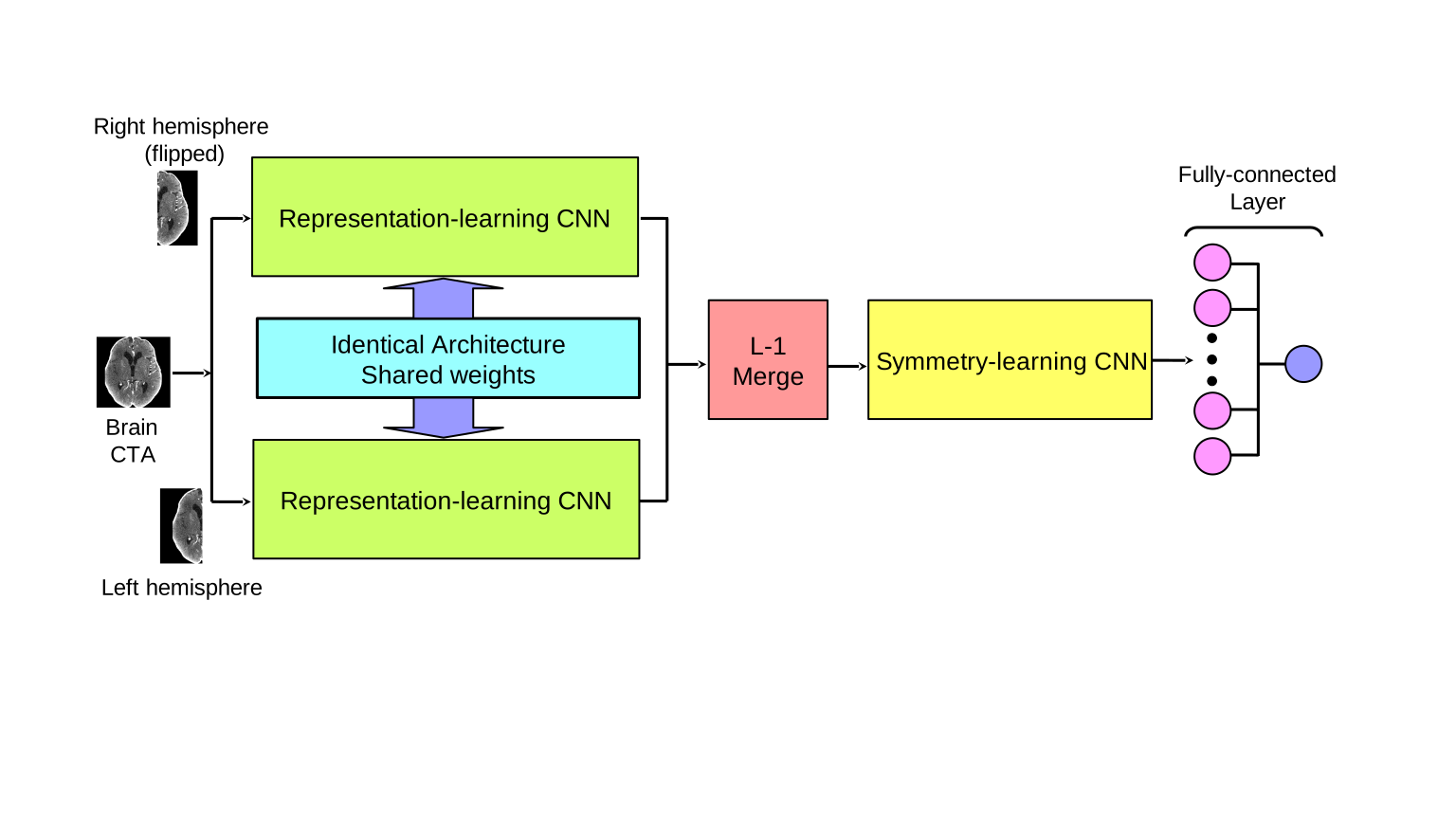
The project is aimed at using machine learning methodologies for detecting Large Vessel Occlusion (LVO) in Acute Ischemic Stroke (AIS) patients using CT-Angiography (CTA) imaging. We have developed a deep learning model, DeepSymNet, which compares the feature representations of the two hemispheres of the brain to detect LVO. The overview of the model is shown here.
DeepSymNet
Fig. 1 DeepSymNet model.
We also generate activation maps for the predictions of DeepSymNet in detecting LVO using ε-Layerwise Relevance Propagation (ε-LRP) [Bach et al., 2015].
A group-level activation map (LVO atlas) was also also generated
Interactive Visualizations (using Papaya)

Interactive visualization of LVO atlas overlaid on a brain with no stroke

Interactive visualization of network activation for a stroke patient (Original CTA brain volume)

Interactive visualization of network activation for a stroke patient (Vessels removed digitally)


Personnel

Luca Giancardo, Ph.D.
Sunil Sheth, MD
Sean I. Savitz, M.D.
Arko Barman, Ph.D.
Victor S. Lopez Rivera, M.D.
Songmi Lee
Mehmet E. Inam


Publications

[1] Determining Ischemic Stroke from CT-Angiography Imaging Using Symmetry-Sensitive Convolutional Networks , IEEE International Symposium on Biomedical Imaging 2019, Arko Barman, Mehmet E. Inam, Songmi Lee, Sean Savitz, Sunil Sheth, Luca Giancardo


Abstracts

[1]
Automated Accurate Determinations of Acute Infarct Core Volumes From CT Angiography Using Machine Learning , Stroke 50 (Suppl_1), AWP77-AWP77, SA Sheth, ME Inam, A Barman, S Lee, SI Savitz, L Giancardo
Presented at INternational Stroke Conference 2019